Indeed vs LinkedIn vs Google Jobs: Which Gets Interviews in 2026?
Indeed, LinkedIn, or Google Jobs — which platform actually gets you interviews in 2026? We break down response rates, best-fit roles, and optimization tactics.
Indeed vs LinkedIn vs Google Jobs: Which Gets Interviews in 2026?
Most job seekers use all three platforms the same way: upload a resume, hit apply, and wait. That's exactly why most job seekers get ignored.
Indeed, LinkedIn, and Google Jobs each operate on completely different mechanics, attract different recruiters, and reward different behaviors. Using the wrong one for your role type can cut your response rate in half before a human ever sees your name. Once you understand how each platform works, though, it takes less than an hour to reposition yourself on all three.
The straight answer upfront: LinkedIn gets you the highest interview rates for professional and mid-to-senior roles; Google Jobs delivers the best response rate by volume for active applicants; and Indeed dominates total hiring output, especially for entry-level, trade, and high-volume positions. The platform that gets you interviews depends on who you are and what you're chasing. Here's how each one actually works.
Platform snapshot: the numbers that matter

| Indeed | Google Jobs | ||
|---|---|---|---|
| Monthly Visits (Mar 2026) | 444M | 2.0B (multi-purpose) | Part of Google Search |
| Job Listings | Aggregated from thousands of sites | ~15.7M active jobs globally | Aggregated from employer sites + boards |
| Best For | Entry-level, high-volume, blue-collar, broad search | Mid-to-senior, professional, networking | Cross-platform discovery, commute filtering |
| Application Response Rate | 8, 15% (entry/mid-level) | ~3, 4% (high volume) / 25, 35% (direct recruiter contact) | ~9, 11% |
| Share of Total Hires | 76% | Smaller share, higher interview conversion | N/A (aggregator) |
| Cost to Job Seekers | Free | Free (Premium optional) | Free |
| Networking Features | None | Full social + messaging network | None |
| Biggest Limitation | Extremely high competition | Application volume dilutes visibility | No profile or networking layer |
One number stands out: Indeed delivers 76% of all hires based on 2025 recruiter data from Breezy. But LinkedIn applicants are twice as likely to land an interview compared to Indeed applicants. Google Jobs, meanwhile, shows an application response rate of roughly 9, 11%, the highest among major platforms, according to a Huntr analysis of 600,000+ applications. These aren't contradictions; they reflect different platform roles in the hiring funnel.
How each platform actually works
Indeed: the volume engine
Indeed is a job search aggregator built for active job seekers. It pulls listings from employer career pages, smaller job boards, and direct postings into one searchable index. With over 444 million monthly visits (Similarweb, March 2026) and 93% of online job seekers in the U.S. using it at some point, it's the largest job-search destination on the open web, and has been since 2010.
That scale cuts both ways. Indeed covers everything from warehouse roles and retail to senior management, so competition is fierce. Its strength is breadth and hiring output: employers posted through platforms like Breezy see a 40-day average time-to-fill and 88% offer acceptance rates through Indeed. When volume matters to employers, they come here.
Indeed's interface is straightforward. Search, filter by location or remote, apply. There's no network to build, no content feed to engage with, no social graph. That simplicity is its identity.
LinkedIn: the professional network
LinkedIn is not just a job board. It's a professional operating system. With roughly 1.2 billion members globally and about 25% accessing it daily, LinkedIn has unmatched reach among white-collar professionals. Its job listings skew heavily toward technology, finance, marketing, consulting, and mid-to-senior roles across most industries.
What makes LinkedIn structurally different is this: 87% of recruiters use it regularly (Jobvite Recruiter Nation 2024). That means recruiters aren't just waiting for you to apply; they're actively searching profiles. A well-optimized LinkedIn profile doesn't just help you apply to jobs, it makes jobs come to you. The 2025 Jobvite data backs this up: 41% of job seekers got interviews from LinkedIn, compared to 32% from Indeed. LinkedIn's network effect enables passive recruiting at a scale no job board can match.
The catch: LinkedIn applications surged 58% year-over-year, flooding recruiters' inboxes. The raw application response rate on LinkedIn drops to around 3, 4% for Easy Apply submissions, but direct recruiter outreach bypasses that entirely.
Google Jobs: the aggregator with an algorithm
Google for Jobs doesn't host jobs itself. It crawls employer career pages and partner job boards (including LinkedIn, ZipRecruiter, Glassdoor, Monster, and more) and surfaces results directly in Google Search. Search any job query in Google and a dedicated job card interface appears at the top of results.
What Google brings is a smarter matching algorithm. It factors in 15+ data points: skills, salary expectations, location, commute time using real traffic and transit data, and even your search history, all to rank results. You're often seeing higher-quality matches rather than just the most recently posted listings.
The Huntr analysis of 600,000+ applications puts Google Jobs' response rate at roughly 9, 11%, the highest of the three. The likely reason is that the algorithm pre-qualifies relevance, so applicants who reach a listing through Google Jobs tend to be better fits from the employer's perspective. The limitation is that Google Jobs has no profile layer, no networking, and no built-in application tracking.
Who wins by role type and industry
This is the decision that matters most. Use the right tool for the right job.
Use Indeed if you are:
- An entry-level or early-career candidate in any industry
- Searching for trade, logistics, healthcare support, retail, or manufacturing roles
- Running a broad, high-volume search across multiple job types
- Applying in markets where employer brand recognition is low and jobs aren't posted on LinkedIn
Use LinkedIn if you are:
- A mid-career or senior professional in tech, finance, marketing, consulting, legal, or sales
- Open to being headhunted, not just applying but being found
- Looking to pivot industries using your network as a bridge
- Targeting specific companies whose hiring managers you can connect with directly
Use Google Jobs if you are:
- Running a first-pass discovery search before committing to specific boards
- Optimizing for commute and location (Google's geographic filtering is genuinely superior)
- Looking for roles posted directly on employer career pages that don't appear on Indeed or LinkedIn
- Trying to cast the widest net with one search before narrowing down
The honest answer for most people in 2026: use all three, but don't treat them the same way. Google Jobs for discovery, Indeed for volume, LinkedIn for professional positioning and recruiter visibility.
Optimization tactics that actually move the needle
Maximize your Indeed performance
- Upload your resume directly. Indeed's Resume feature lets recruiters search for candidates, not just post jobs. A complete, keyword-rich resume gets you inbound contact.
- Use exact-match job titles in your search. Indeed's algorithm weights title matches heavily. If your target role is "Data Analyst," don't search "analytics professional."
- Apply within 24, 48 hours of posting. Response rates drop sharply after the first wave of applicants. Set up Indeed Alerts for instant notifications.
- Tailor your Indeed resume for each application cluster. Save multiple resume versions for different role types; Indeed lets you upload several.
- Target roles with "Easily Apply" turned off when possible. Those jobs require a dedicated application, which filters out casual applicants and improves your relative visibility.
Maximize your LinkedIn performance
- Make your headline a value statement, not a job title. "Senior Product Manager | B2B SaaS | 0 to 1 Product Launches" outperforms "Senior Product Manager at [Company]" in recruiter searches.
- Turn on "Open to Work," but use the private setting for active searches. This signals recruiters without alerting your current employer.
- Optimize your "About" section with role-relevant keywords. LinkedIn's search algorithm reads this field heavily. Write it in first person and include specific skills, tools, and outcomes.
- Engage with content from target companies. Thoughtful comments on posts by hiring managers at your target companies put your name in front of them before you apply, and that familiarity helps.
- Use LinkedIn's "Easy Apply" strategically, not universally. For highly competitive roles at well-known companies, reach out to the recruiter or hiring manager directly with a brief message before or after applying.
- Request skill endorsements for your top 3 to 5 skills from colleagues. LinkedIn surfaces profiles with more endorsements higher in recruiter searches.
Maximize your Google Jobs performance
- Search with specific, natural-language queries like "remote UX designer jobs no experience required." Google's algorithm handles semantic search better than keyword-only boards.
- Use the commute filter. Input your address and set a realistic travel time. Google calculates actual transit and traffic data, not just miles.
- Set salary filters early to eliminate listings that won't meet your floor. This improves your time-to-apply efficiency significantly.
- Save searches and enable alerts in the Google Jobs interface to catch new postings quickly. The same 24 to 48 hour early-apply window applies here.
- When you find a role on Google Jobs, click through to the original source and apply there directly. This preserves tracking for the employer and may get your application into their ATS faster.
Your 2026 multi-platform job search workflow
Stop treating these platforms as independent silos. Here's a practical sequence that takes less than two hours to set up:
- Build your LinkedIn profile first. It's the only platform where your profile is your application. Spend 60 to 90 minutes optimizing your headline, About section, experience bullets, and skills before you apply anywhere.
- Run your initial search on Google Jobs. Use it to map the landscape: what titles are hiring, which companies are active, what salary ranges appear. This takes 20 to 30 minutes and costs nothing.
- Set up Indeed Alerts for your top 3 target roles. Instant notifications for new postings mean you're always in the first-apply window. This takes 5 minutes.
- Apply broadly on Indeed for volume and speed. Tailor your resume to the role cluster, not to each individual posting. Aim for 5 to 10 quality applications per day, not 50 generic ones.
- Use LinkedIn for targeted, high-value applications. Pick 10 to 15 companies you genuinely want to work at. Follow them, engage with their content, connect with recruiters, and apply through LinkedIn with a personalized note.
- Track everything. Use a simple spreadsheet (or a free tool like Huntr) to log where you applied, when, and what response you got. After two weeks, you'll know which platform is working for your specific role and market. Then double down on it.
Who should (and shouldn't) use each platform
Skip LinkedIn if...
- You're targeting hourly, trade, or entry-level roles. LinkedIn's audience skews professional, and many of these roles simply aren't posted there.
- You're not willing to invest time in your profile. A sparse LinkedIn presence actively hurts you; recruiters treat it as a red flag.
Skip Indeed if...
- You're targeting executive or C-suite roles. Most are filled through networks and executive search firms, not high-volume boards.
- You're in a highly specialized niche where a vertical job board (Dice for tech, Mediabistro for media) will give you better signal-to-noise.
Skip Google Jobs as your primary channel if...
- You need to build a recruiter-facing profile. Google Jobs has no identity layer, so it can't help you be found.
- You want company-specific insights like reviews, salary data, or employee culture signals during your search.
Frequently asked questions
Which platform has the highest interview rate in 2026?
It depends on how you measure it. LinkedIn shows the highest interview rate for direct recruiter outreach: 25 to 35% response rates for professional roles, per Lever's hiring benchmarks. For active applications, Google Jobs shows the highest raw response rate at 9 to 11% (Huntr, 600k+ applications). Indeed has the highest total hiring output, delivering 76% of all hires in 2025 recruiter data.
Is LinkedIn Premium worth it for job seekers in 2026?
LinkedIn Premium Career gives you InMail credits, visibility into who viewed your profile, and "Featured Applicant" status on some roles. The most concrete benefit is seeing full applicant lists and knowing where you rank. For active job seekers who are consistently applying on LinkedIn, many find the data worth a month or two of subscription during an intensive search, but it's not essential if your profile is well-optimized and you're using free features strategically.
Does applying through Google Jobs hurt my application?
No. Google Jobs routes you to the original job posting, whether that's the employer's career page or the source job board. Your application lands in the same place it would if you'd found the listing directly. The only difference is how you discovered it.
Why does Indeed have more hires if LinkedIn has better interview rates?
Scale. Indeed processes far more total applications, so even at a lower conversion rate, it produces more absolute hires. LinkedIn's advantage is efficiency: a smaller number of better-matched applicants converting at a higher rate. For job seekers, this means Indeed is better for casting a wide net, while LinkedIn rewards precision targeting.
Can I use all three platforms simultaneously without it looking desperate to employers?
Absolutely, and you should. Employers rarely know which platform you found their listing on (unless you apply through two different channels for the same role, which you should avoid). Using all three is standard practice in 2026. The key is tailoring your approach on each platform rather than copy-pasting the same generic application everywhere.
Editor's Picks
 News
News 57,000 Jobs Added: How to Get Hired in the 2026 Slowdown
Jul 10, 2026
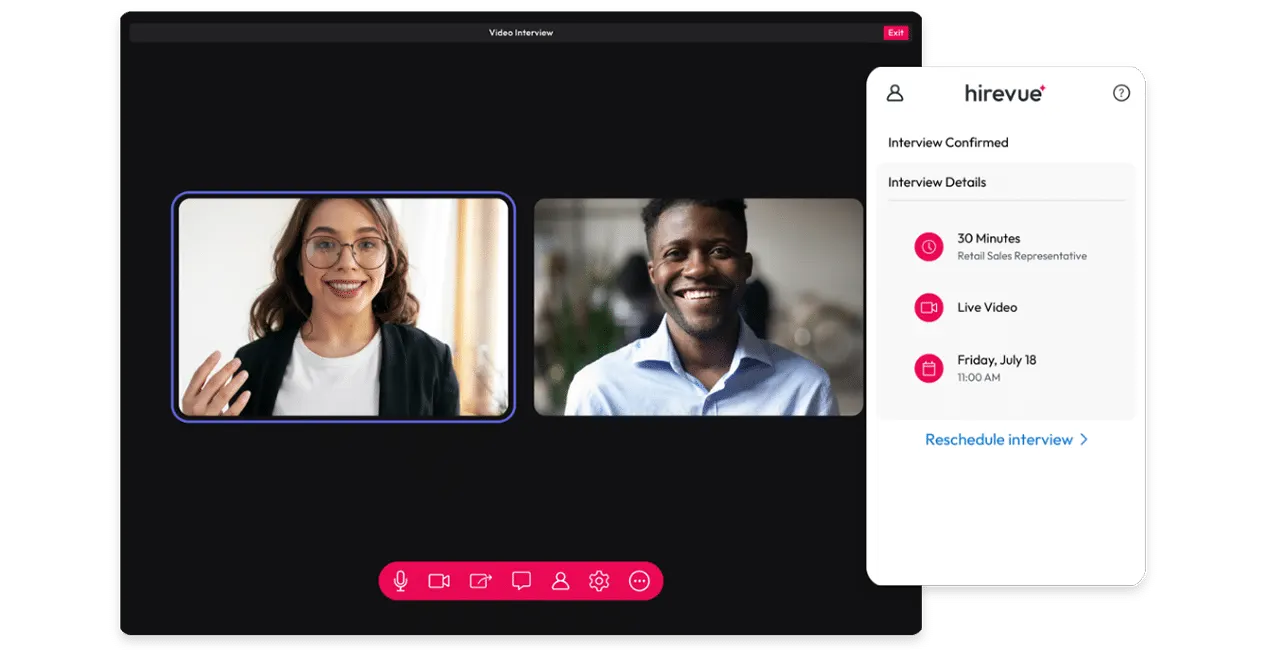 Interviews
 Ace Your AI Video Interview in 2026: HireVue Tips & Prep Guide
Jul 10, 2026
 Resume
 Beat AI-Powered ATS in 2026: What Your Resume Must Do Now
Jul 10, 2026
 Skills
 Best AI Skills to Put on Your Resume in 2026 (Get Hired Fast)
Jul 10, 2026