57,000 Jobs Added: How to Get Hired in the 2026 Slowdown
The June 2026 jobs report showed only 57,000 new jobs — far below forecasts. Here's what it means for your job search and exactly what to do about it.
What Happened: The BLS June 2026 Jobs Report

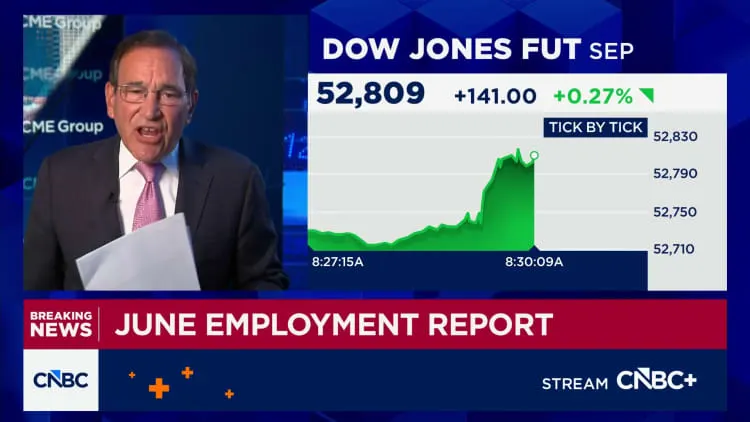
The U.S. Bureau of Labor Statistics released its June 2026 Employment Situation Summary on July 2, 2026, and the numbers were a cold splash of water. Nonfarm payrolls grew by just 57,000 for the month, missing the Dow Jones consensus forecast of 115,000 by nearly half and falling well short of the 100,000 to 115,000 range economists had projected. That followed a downwardly revised May figure of 129,000, itself a cut of 74,000 combined jobs from the April and May totals previously reported, meaning hiring was softer heading into summer than anyone realized.
The unemployment rate ticked down slightly to 4.2%, but that drop came with an asterisk: the labor force participation rate fell 0.3 percentage points to 61.5%, its lowest level since March 2021. Fewer people searching, not more people finding work.
What this means if you're job hunting right now
The honest picture: the labor market hasn't collapsed, but it has clearly downshifted. Labor economists are calling this a "low hire, low fire" environment. Layoffs remain historically modest, but new hiring is subdued. If you're actively searching, that means more competition for fewer open doors and longer timelines between application and offer.
The good news is that 57,000 jobs is still 57,000 jobs, and certain sectors are actively adding headcount right now. The job seeker who targets those pockets, positions their credentials precisely, and moves quickly will still land. The one who sprays applications broadly and waits will struggle. This market rewards precision over volume.
Key numbers at a glance
- +57,000 total nonfarm payroll jobs added in June 2026 (BLS, July 2, 2026)
- 4.2% unemployment rate, down slightly, but driven by a participation drop, not hiring gains
- 61.5% labor force participation rate, lowest since March 2021
- 2.7% unemployment rate for college-degreed professionals (unchanged)
- 1.9 million long-term unemployed (jobless 27+ weeks), up 286,000 over the year
- 7.6 million job openings in May 2026 (JOLTS), the highest level since May 2024
- 1.9% quits rate in May, near a record low, signaling workers feel locked in
- 3.5% year-over-year wage growth, steady and in line with forecasts
"Job openings sit at 7.6 million, the highest since May 2024, yet actual hiring remains stubbornly flat. The gap between open roles and filled ones is your opportunity."
Which workers and job seekers feel this first
The slowdown isn't hitting everyone equally. Where you sit in the market determines how hard you need to pivot your strategy.
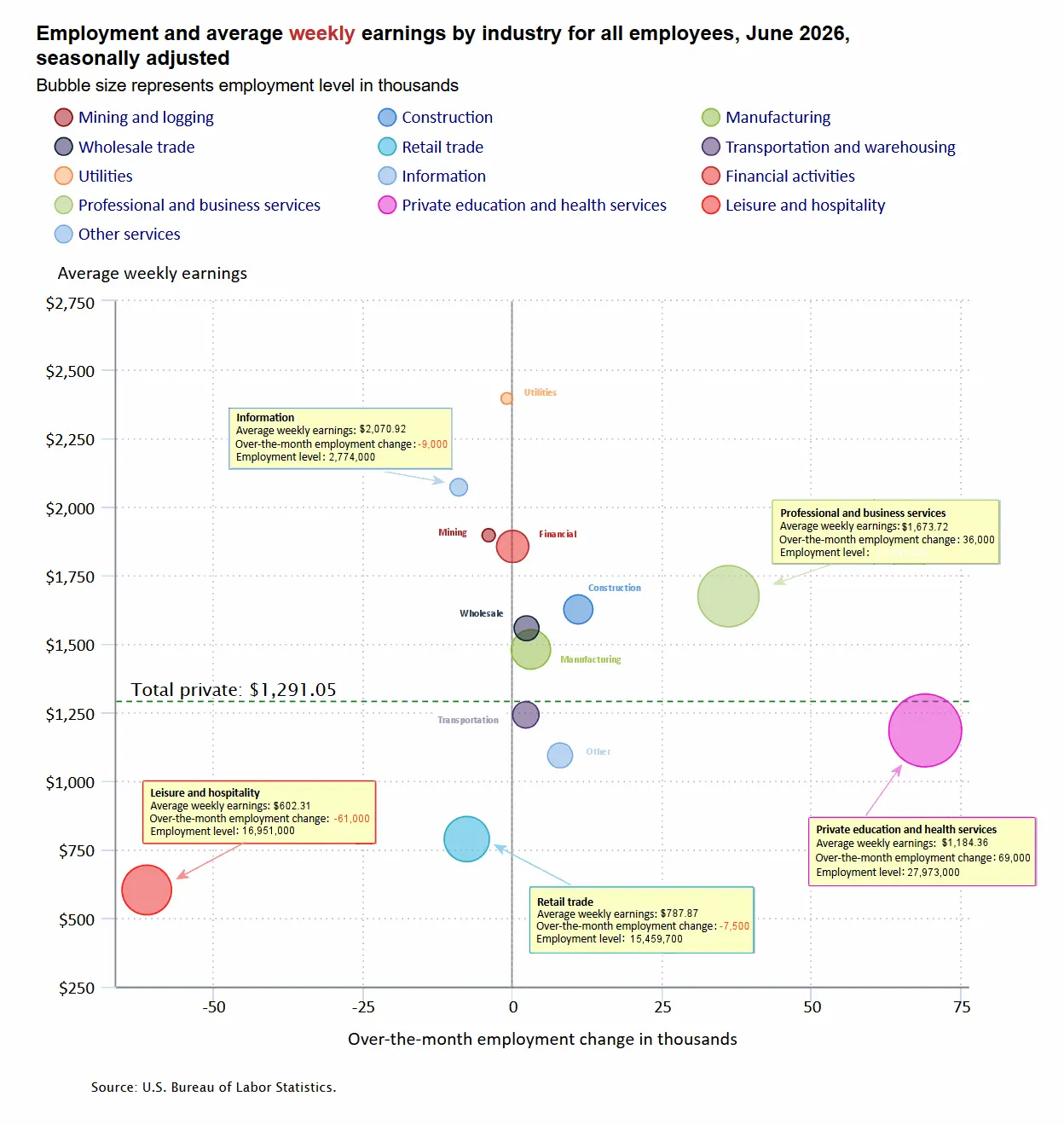
- Healthcare and social services workers: Still in demand. Health care added 22,000 jobs; private education and health services combined added 69,000. Social assistance added 25,000, above its 12-month average.
- Professional and business services professionals: A clear bright spot at +36,000 jobs in June, including 9,300 in temporary help services. Consultants, project managers, and analysts should look here.
- Hospitality, retail, and information workers: These sectors contracted. Leisure and hospitality shed 61,000 jobs, far worse than seasonal norms. Information lost 9,000; retail trade lost 7,500. If you're in one of these fields, reframe your transferable skills and consider adjacent pivots now.
- Long-term unemployed job seekers: With 27.3% of all unemployed people now out of work for 27 or more weeks, competition at the top of the funnel is real. Differentiation, not just persistence, is what breaks the cycle.
- Entry-level candidates: The low quits rate means fewer roles opening up through natural attrition. New grad and early-career candidates face tighter than usual pipelines.
What employers and recruiters are doing right now
Employers are cautious but not frozen. The JOLTS data tells a nuanced story: 7.6 million open roles exist, yet actual hires held flat at 5.2 million in May. That gap means companies are posting roles but taking longer to fill them, raising the bar on candidates, and in many cases waiting for budget clarity before extending offers.
Temporary and contract hiring is quietly picking up. The 9,300 temp-help services gain in professional and business services is a signal worth paying attention to. Employers are testing candidates before committing to permanent headcount. Temp-to-perm pipelines are worth pursuing deliberately, not reluctantly.
The Conference Board's Employment Trends Index fell for the second straight month, pointing to further payroll cooling ahead. Hiring managers are fielding more applicants per role. That means your resume is competing in a thicker stack, and ATS optimization (matching your language precisely to job descriptions) matters more than it did even six months ago.
What you should do this week
The market hasn't closed; it's just tighter. Here's how to work smarter in a 57,000-job month.
Concentrate your applications in the growing sectors. Healthcare, social assistance, and professional and business services are adding jobs right now. If your background can stretch into any of these verticals, make that pivot explicit in your resume summary and cover letter. Don't wait for your home sector to rebound.
Target open roles that have been posted for 30 or more days. The JOLTS gap (lots of openings, slow hiring) means many positions sit unfilled not because the need went away, but because the right candidate hasn't shown up yet. Search filters on LinkedIn and Indeed let you sort by post date. Stale listings often have less competition and a hiring manager who is genuinely frustrated by the gap.
Get your resume ATS-ready before you apply anywhere. With more candidates per role, hiring managers are leaning harder on applicant tracking systems to filter before a human ever reads your file. Pull the exact keywords from each job description and mirror them in your skills section and bullet points, not stuffed in randomly, but woven into real accomplishments.
Say yes to contract and temp roles. The +9,300 gain in temp help services is a real signal. Contract work keeps your skills current, adds recent employer names to your resume, and frequently converts to permanent. In a cautious hiring market, it's one of the fastest paths through the door.
Work your network with specificity. In a low-quit, low-hire market, many roles are filled quietly before they're ever posted. Reach out to former colleagues, managers, and contacts in your target sectors with a clear, one-paragraph message: the type of role you're seeking, two or three specific skills you bring, and a direct ask for a conversation or referral. Vague "staying in touch" messages don't move the needle right now.
Reframe your value if you're in a contracting sector. If you're in hospitality, retail, or media, your experience almost certainly has transferable applications in operations management, customer experience, digital content, or data analysis. Audit your last three roles for skills that map to growing sectors and lead with those on your resume.
What to watch next
The next major data point is the August 2026 BLS Employment Situation report, covering July payrolls and due for release in early August. Watch whether professional and business services maintain their hiring momentum and whether leisure and hospitality rebounds from its anomalous June dip. The Federal Reserve's July 2026 FOMC meeting will also be closely watched: if the Fed signals rate cuts in response to slowing growth, that could unlock employer confidence and loosen hiring budgets in Q3. We'll cover both as they land.
Editor's Picks
 Interviews
 Ace Your AI Video Interview in 2026: HireVue Tips & Prep Guide
Jul 10, 2026
 Resume
 Beat AI-Powered ATS in 2026: What Your Resume Must Do Now
Jul 10, 2026
 Skills
 Best AI Skills to Put on Your Resume in 2026 (Get Hired Fast)
Jul 10, 2026
 Job Search
 Hidden Job Market 2026: Get Referred Before Jobs Are Posted
Jul 10, 2026