12 Non-Clinical Healthcare Jobs Hiring in 2026 (No Degree Needed)
Discover 12 non-clinical healthcare jobs hiring in 2026 that don't require a degree — with real salary ranges, certifications, and how to break in fast.

12 Non-Clinical Healthcare Jobs Hiring in 2026 (No Degree Needed)
Healthcare isn't just growing. It's carrying the entire U.S. labor market on its back right now.
At the start of 2026, healthcare accounted for nearly 82,000 of the 130,000 jobs added to the economy, roughly 63% of total employment gains. And the majority of those open seats aren't in operating rooms. They're behind the scenes: in billing departments, scheduling software, advocacy offices, and health tech platforms. You don't need a stethoscope. You don't always need a degree. What you do need is a clear map of where the opportunities are.
This guide covers 12 non-clinical healthcare roles actively hiring in 2026, what they pay, what they require, and how to position yourself to land one.
What "non-clinical" actually means
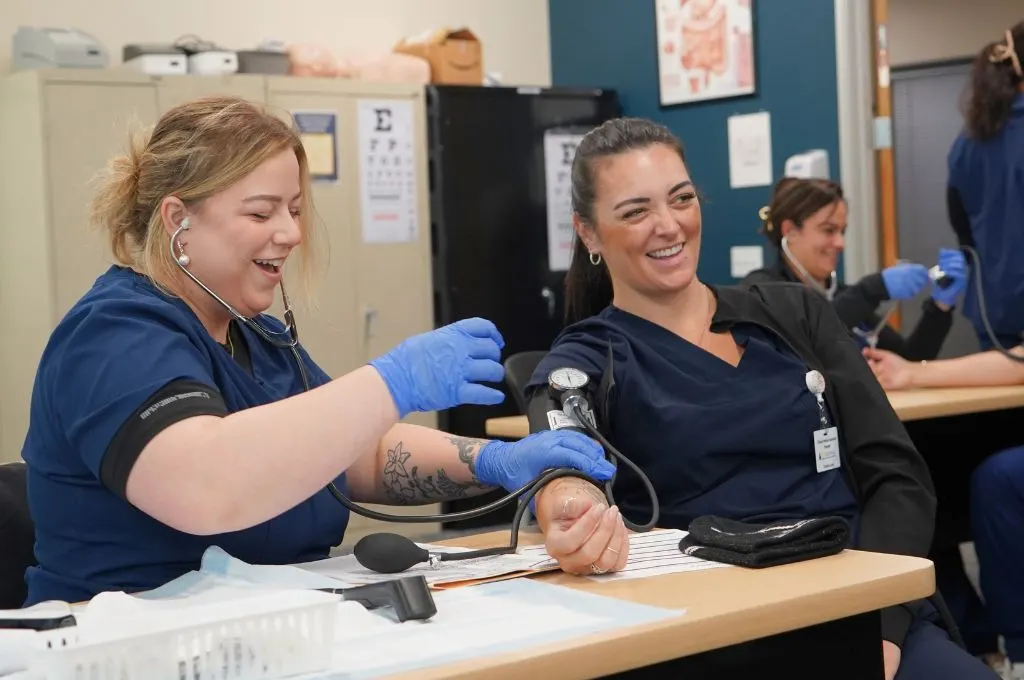
Non-clinical healthcare workers keep the system running without directly diagnosing, treating, or testing patients. Think receptionists, billing specialists, patient advocates, health IT professionals, and care coordinators. They handle administrative work, manage information systems, support patient communication, and run the operational backbone of every hospital, clinic, and health tech company.
Here's why this matters in 2026: demand for non-clinical support roles is growing faster than clinical roles, projected at 15% growth through 2032 compared to 8% for practitioner roles. By late 2026, the U.S. is projected to face a 4.6 million worker gap specifically in support positions. The pipeline is wide open.
The 12 roles: what they do and why they're hiring

These roles span entry-level to mid-career and cover a range of settings: remote, hybrid, and on-site. All 12 can be entered without a four-year degree.
1. Medical billing and coding specialist
Translates clinical documentation into standardized codes used for insurance reimbursement. Almost entirely computer-based and one of the most accessible remote careers in healthcare. The BLS projects 7% job growth from 2024 to 2034 (classified as "much faster than average"), with roughly 14,200 openings per year.
2. Medical receptionist / front desk coordinator
Manages patient check-ins, scheduling, phone triage, and HIPAA-compliant data handling. There are over one million medical receptionists in the U.S. alone, and high turnover keeps hiring constant. Strong people skills matter more than credentials here.
3. Patient services representative
Works directly with patients to resolve billing questions, navigate insurance processes, and coordinate access to care. This role bridges clinical teams and the financial/administrative side, and it's increasingly in demand as healthcare systems focus on patient retention.
4. Health information technician
Manages electronic health records (EHR), ensures data accuracy, and maintains compliance with privacy regulations. As hospitals digitize more deeply, this role is becoming critical infrastructure.
5. Medical transcriptionist
Converts voice recordings from physicians into written documentation. AI tools have shifted the role toward editing and quality control rather than raw transcription, making attention to detail and medical terminology knowledge the core skills.
6. Pharmacy technician
Assists pharmacists with dispensing medications, processing insurance claims, and managing inventory. State licensure is required (not a degree), and training programs often run six months or less, making this one of the fastest paths into healthcare.
7. Healthcare customer service representative
Handles inbound calls, patient inquiries, appointment reminders, and insurance verification, often remotely. As telehealth expands, healthcare call centers and virtual care platforms are hiring heavily for this role.
8. Medical administrative assistant
Supports clinical staff with scheduling, correspondence, supply ordering, and office coordination. The role overlaps with receptionist work but often carries broader operational responsibilities across departments.
9. Patient advocate / care navigator
Helps patients understand their diagnoses, navigate insurance, and access community resources. This is a rapidly growing role driven by value-based care models and patient experience metrics, especially in oncology, behavioral health, and chronic disease management.
10. Healthcare data analyst (entry-level)
Analyzes operational, financial, or patient data to support decision-making. Entry-level positions increasingly value Excel, SQL, and familiarity with EHR platforms over formal degrees, especially at health tech startups and digital health companies.
11. Medical equipment technician / sterile processing technician
Cleans, sterilizes, and maintains surgical instruments and medical equipment. Entirely non-clinical, requires no degree, and pays well above minimum wage. Certification (CSPDT or CRCST) improves hiring prospects considerably.
12. Health IT support specialist
Provides technical support for EHR systems, clinical hardware, and healthcare software platforms. This role combines general IT skills with healthcare-specific platform knowledge and is one of the strongest crossover options for people entering from outside healthcare entirely.
Realistic salary ranges in 2026
These ranges reflect BLS data and current market benchmarks. Remote roles in billing, coding, and IT support often match or exceed on-site equivalents.
| Role | Entry-Level | Mid-Level | Experienced |
|---|---|---|---|
| Medical Billing & Coding Specialist | $35,780 | $50,250 | $80,950+ |
| Medical Receptionist | $30,000 | $38,000 | $48,000 |
| Patient Services Representative | $32,000 | $42,000 | $55,000 |
| Health Information Technician | $36,000 | $47,000 | $65,000 |
| Medical Transcriptionist | $28,000 | $37,000 | $50,000 |
| Pharmacy Technician | $31,000 | $40,000 | $52,000 |
| Healthcare Customer Service Rep | $30,000 | $40,000 | $52,000 |
| Medical Administrative Assistant | $33,000 | $43,000 | $56,000 |
| Patient Advocate / Care Navigator | $38,000 | $52,000 | $70,000 |
| Healthcare Data Analyst (Entry) | $42,000 | $60,000 | $85,000+ |
| Sterile Processing Technician | $35,000 | $46,000 | $58,000 |
| Health IT Support Specialist | $40,000 | $55,000 | $75,000+ |
Certification pays. In medical billing and coding alone, certified coders earn 20.7% more than non-certified peers, according to AAPC data. A short-term investment in credentials consistently produces a measurable salary bump across these roles.
Required qualifications and skills
The honest answer on degrees: you don't need one for any of the 12 roles listed here. In 2023, over 24% of healthcare workers held only a high school diploma, per BLS data. What employers actually screen for varies by role:
- Medical Billing & Coding: CPC, CCS, CCA, or CBCS certification (no degree required for any of them)
- Pharmacy Technician: State licensure plus PTCE or ExCPT certification
- Sterile Processing Tech: CSPDT or CRCST certification
- Health Information Tech: RHIT credential (offered by AHIMA) preferred; an associate degree helps but isn't always required
- Health IT Support: CompTIA A+ or vendor-specific EHR certifications (Epic, Cerner) go a long way
- All other roles: High school diploma or GED, plus role-specific on-the-job training or short courses
Most programs that prepare you for these certifications run between three and twelve months, and many are available online.
What soft skills do healthcare employers actually prioritize? Discretion tops the list. HIPAA compliance isn't optional, and employers want people who understand patient privacy instinctively. Beyond that: clear written and verbal communication (especially for patient-facing roles), comfort with EHR software platforms, and the ability to stay composed under time pressure. Problem-solving matters more than most job descriptions let on. The best non-clinical staff troubleshoot insurance denials, scheduling conflicts, and data errors without escalating every issue upward.
Hiring trends reshaping non-clinical healthcare in 2026
Remote work is real and expanding. Medical billing, coding, transcription, health IT support, and customer service roles have seen significant remote adoption since 2020, and that trend has solidified. If a task lives on a screen and doesn't require patient contact, there's a strong chance it can be done from home. This opens the field to job seekers outside major metro areas.
Trend: AI is changing roles, not eliminating them. AI-assisted coding tools and ambient clinical documentation are going mainstream, but they're creating a new need for human reviewers who can catch errors, handle complex cases, and manage exceptions. The shift is from "do it all manually" to "validate, correct, and manage." Coders and transcriptionists who learn to work with AI tools will be the most competitive candidates in 2026 and beyond.
Trend: The aging population is structural, not cyclical. Baby boomers now make up roughly 20% of the U.S. population, and all of them are now Medicare-eligible. As the oldest boomers enter their late 70s (the age range where healthcare utilization surges), demand for care coordination, patient advocacy, and support services will keep climbing for at least a decade. This isn't a hiring spike. It's a long-term structural shift.
Trend: Value-based care is creating new non-clinical roles. As healthcare systems shift from fee-for-service to value-based models, they need more people focused on patient outcomes, care navigation, and community health coordination. Patient advocates and care navigators are among the fastest-growing non-clinical roles as a direct result, and they're roles where lived experience and communication skills matter as much as formal training.
Industry-specific resume and interview tips
1. Name your software platforms explicitly. Hiring managers in healthcare scan for specific tools: Epic, Cerner, Meditech, eClinicalWorks, Kareo. If you've used any EHR, billing, or practice management platform, name it in your skills section. Generic phrases like "proficient in medical software" won't pass ATS filters.
2. Show HIPAA awareness without prompting. Mention compliance experience naturally in your bullet points. Something like: "Maintained patient records in compliance with HIPAA privacy standards across 200+ daily interactions." It signals you understand the stakes, which matters enormously to healthcare employers.
3. Quantify wherever you can. Healthcare admin roles are measurable. How many patients did you check in per shift? What was the claims denial rate before and after your changes? How many calls did you handle daily? Numbers make your resume concrete in a field where accuracy is everything.
- Weak: "Helped with insurance billing processes"
- Strong: "Processed 150+ insurance claims weekly with a 96% first-pass acceptance rate"
4. Lead with your certification, not your degree (or lack of one). If you have a CPC, PTCE, or CRCST, put it right after your name in the header. Certifications are the currency of non-clinical healthcare hiring. Don't bury them.
5. Prepare for scenario-based interview questions. Healthcare interviewers commonly ask: "Tell me about a time you handled a difficult patient interaction" or "How would you handle a billing discrepancy that a patient was upset about?" Have two or three STAR-format stories ready that show composure, problem-solving, and patient-first thinking.
6. Research the specific EHR system they use before your interview. Check the job listing and LinkedIn for clues. Even spending 30 minutes watching tutorial videos on Epic or Cerner before an interview signals genuine interest and sets you apart from candidates who show up generic.
Is this industry right for you?
| You'll thrive in non-clinical healthcare if... | You may want to reconsider if... |
|---|---|
| You want job stability in a recession-resistant field | You dislike repetitive computer-based tasks |
| You're detail-oriented and accuracy-focused | You struggle with strict compliance requirements |
| You enjoy helping people without direct clinical exposure | You find medical terminology overwhelming (it can be learned, but it's part of the job) |
| You want remote or hybrid flexibility | You need a highly creative, unstructured work environment |
| You're ready to upskill quickly with a short certification | You're expecting degree-free to mean training-free |
| You want a clear promotion path into healthcare management | You're not comfortable navigating insurance systems |
The best-fit candidate is someone who's organized, discreet, good with technology, and genuinely motivated by the idea that their behind-the-scenes work directly affects patient outcomes. You don't need to love medicine. You need to respect the weight of the work.
Next steps to break in or level up
Here's a concrete action plan, in order.
Choose your entry role. Pick one role from this list that aligns with your existing skills. Customer service background? Start with Healthcare Customer Service Rep or Medical Receptionist. Tech-inclined? Look at Health IT Support. Detail-oriented and comfortable with data? Medical Billing and Coding is your fastest path to a meaningful salary bump.
Get certified fast. Most entry-level non-clinical certifications take three to twelve months and are available online. Start with AAPC's CPC course for coding, NHA's CBCS for billing, PTCB for pharmacy tech, or IAHCSMM for sterile processing. Many programs cost under $1,000, and some community colleges offer them free with workforce development funding.
Build platform familiarity. Free and low-cost EHR training exists. Epic has a community learning environment; YouTube has tutorials for Meditech, Cerner, and Kareo. Even 10 hours of hands-on practice before you apply makes a real difference.
Target healthcare-specific job boards. Beyond Indeed and LinkedIn, use Health eCareers, Vivian Health (for support roles), and your local hospital system's careers page directly. Many non-clinical openings get posted internally before hitting general boards. Follow your target employers on LinkedIn and check their pages weekly.
Tailor every application to the specific role. Healthcare ATS systems are unforgiving. Mirror the language in the job posting. If they say "EHR data entry," use that phrase, not "electronic records management." Match their terminology exactly.
Network inside the system. Join AAPC or AHIMA's local chapters, attend virtual healthcare career fairs, and connect with non-clinical healthcare professionals on LinkedIn. Ask for informational interviews. Most people in these roles are happy to share how they got started, and a warm referral in healthcare, as in every field, improves your odds considerably.
Healthcare is hiring, the barriers to entry are lower than most people realize, and the structural demand isn't going anywhere. Pick your role, get your credential, and start applying. The door is open.
Editor's Picks
 News
News 57,000 Jobs Added: How to Get Hired in the 2026 Slowdown
Jul 10, 2026
 Interviews
 Ace Your AI Video Interview in 2026: HireVue Tips & Prep Guide
Jul 10, 2026
 Resume
 Beat AI-Powered ATS in 2026: What Your Resume Must Do Now
Jul 10, 2026
 Skills
 Best AI Skills to Put on Your Resume in 2026 (Get Hired Fast)
Jul 10, 2026