AI Literacy or AI Engineering: Which Skill Pays Off in 2026?
AI literacy or AI engineering — which skill pays off most in 2026? Get salary data, demand signals, and a clear action plan for your career track.
AI Literacy or AI Engineering: Which Skill Pays Off in 2026?
US job postings requiring AI skills grew 144% year over year as of April 2026, and the workers who understand which AI skill to build are already pulling ahead.
That split matters more than most people realise. AI isn't just creating new job titles; it's sorting the entire labour market into two distinct lanes. One lane rewards workers who understand AI tools well enough to use them strategically. The other rewards those who can actually build those tools. Both lanes come with real wage premiums. The question is which one fits your background, timeline, and goals right now.
This article breaks down what separates AI literacy from AI engineering, what each pays, and the fastest credible path into whichever lane is right for you.
Two skills, two very different career tracks

Before you invest a single hour in upskilling, it helps to understand what these two terms actually mean in a hiring context, not in a textbook.
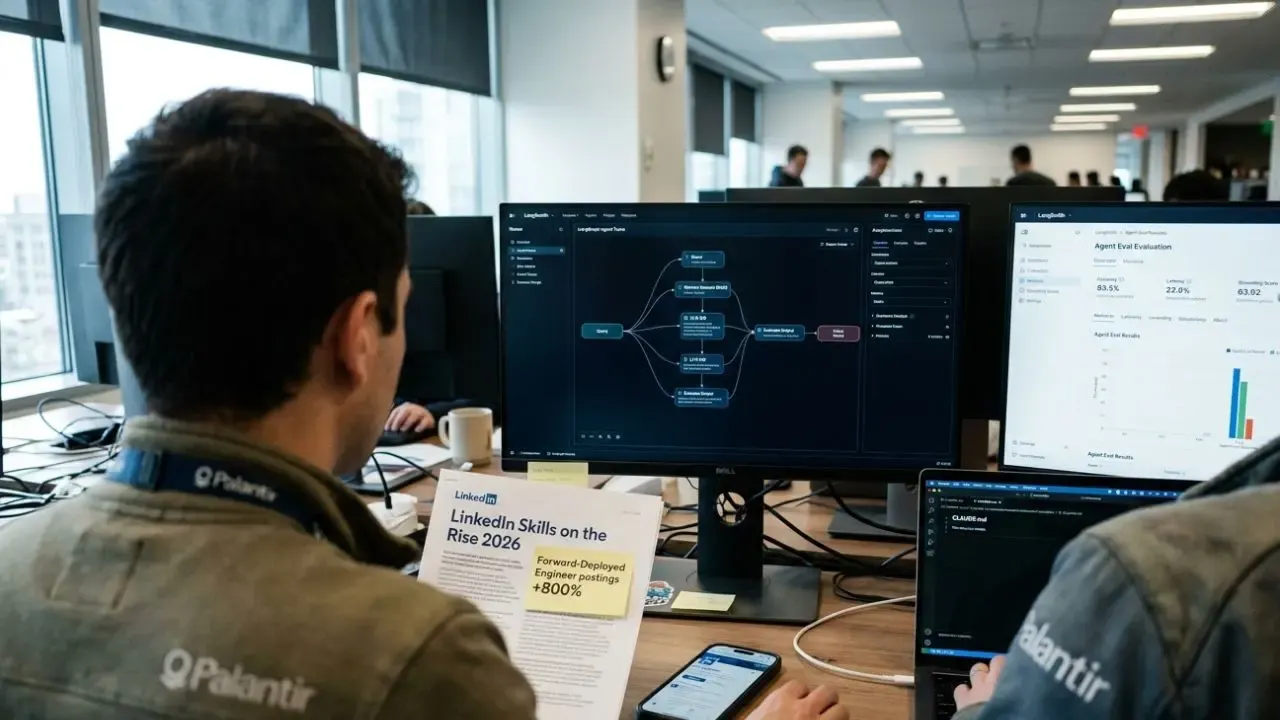
AI literacy means you can work effectively alongside AI. You know how to write a sharp prompt, how to evaluate whether an AI output is trustworthy, and how to use tools like ChatGPT, GitHub Copilot, or AI-powered analytics platforms to accelerate your work. You understand AI's limitations and you don't introduce risk by blindly trusting outputs. Critically, AI literacy does not mean you can code machine learning models. It's the skill of being a careful, critical collaborator with AI systems, and it topped LinkedIn's Skills on the Rise 2026 list precisely because it applies across almost every profession.
AI engineering is a different animal. AI engineers design, build, and deploy AI systems. They sit at the intersection of software engineering, data science, and machine learning: writing code, training models, managing large datasets, and owning end-to-end AI features in production. This is a technical discipline that requires programming proficiency (typically Python), a working knowledge of ML frameworks, and experience moving models from prototype to live systems. The skill ceiling and the salary ceiling are both considerably higher.
Why employers are hiring for both right now
The demand signal isn't subtle. Stanford's HAI 2026 AI Index found that AI-related skills now appear in 2.5% of all US job postings, a 297% increase over the past decade. PwC's 2026 Global AI Jobs Barometer, which analysed more than one billion job ads across six continents, identified a clear two-track labour market taking shape.
Here's what that looks like in practice:
- "Professionalised" roles, where AI handles routine tasks so human judgement becomes the core value, are growing twice as fast in job availability and seeing 42% faster salary growth than roles where AI simply makes the work easier for non-experts.
- AI engineering roles specifically are seeing demand grow 7x over two years, driven by companies racing to deploy proprietary models and AI-powered products.
- Healthcare, finance, and manufacturing are expanding AI skill requirements almost as fast as tech. This is not a niche hiring trend.
- The average wage premium for workers with AI skills has hit 62% according to PwC's 2026 Barometer, up from 57% last year, and in consumer markets it runs as high as 118%.
- Lightcast analysis of 1.3 billion job postings found that roles requiring AI skills advertised salaries 28% higher (roughly $18,000 more per year), with two or more AI skills pushing that premium to 43%.
The most striking finding comes from a 2026 experimental study of 1,700 hiring professionals in the US and UK: candidates with AI skills on their resumes were 8 to 15% more likely to be invited for an interview, even in non-technical roles like office administration and graphic design. When those skills were backed by a recognised certificate, the effect was even stronger.
What each track actually pays in 2026
Let's be specific, because this is where most career advice goes vague.
AI literacy: the broad premium
AI literacy doesn't come with a single salary band. It's a multiplier applied across your existing role. That said, the multiplier is meaningful:
- Workers with AI skills earn, on average, 28 to 62% more than peers without them, depending on industry and role.
- In the UK, AI skills now carry a 23% advertised salary premium, larger than the premium for a Bachelor's degree (8%) or even a Master's (13%).
- The premium is highest in consumer markets (118%) and lowest in government and public sector (16%).
In practice, AI literacy makes you more competitive for promotions, more resilient to automation, and more attractive to employers managing AI adoption without a technical team to lead it.
AI engineering: the high-ceiling track
If you can build and deploy AI systems, the salary trajectory is steep:
| Experience level | US base salary range |
|---|---|
| Junior AI engineer | $95K to $150K |
| Mid-level AI engineer | $130K to $220K |
| Senior AI engineer | $180K to $350K |
| Staff / principal | $280K to $700K+ |
The average senior AI engineer in the US earns $285,385 in base salary, with top-10% earners hitting $473,615 (Glassdoor, June 2026). At frontier labs (OpenAI, Anthropic, Google DeepMind, Meta Superintelligence Labs), median total compensation for senior roles lands between $600K and $795K, with the 90th percentile clearing $1.28M including equity.
These numbers aren't typical. But they set the ceiling, and even mid-tier AI engineering roles pay well above the median for knowledge workers.
How to build the right skill for your starting point
The fastest path depends on where you're starting. Here's a tiered roadmap for each track.
Track 1: build AI literacy (3 to 6 months)
This is the right track if you're not a developer, you're already employed in a functional role (marketing, HR, finance, operations, healthcare), and you want to become significantly more competitive without a career detour.
- Learn prompt engineering fundamentals. Start with free resources: OpenAI's Prompt Engineering guide, Anthropic's Claude documentation, or Google's Prompting Essentials course (free on Google's AI learning hub). Aim to write prompts that produce specific, usable outputs, not just "ask ChatGPT a question."
- Get certified. Google's AI Essentials certificate and Microsoft's AI Skills Navigator programme are both employer-recognised and completable in under a month. The 2026 hiring study confirmed that certificates from companies or universities meaningfully boost interview callback rates.
- Apply it inside your current job. Use AI tools to automate one repetitive task in your existing workflow. Document the time saved or quality improvement. You'll use this on your resume.
- Understand AI risk and limitations. Take a short course in AI ethics or responsible AI use (Coursera and edX both have solid options from universities). This separates informed users from enthusiastic but reckless ones, and hiring managers can tell the difference.
Track 2: build AI engineering skills (12 to 24 months)
This is the right track if you already have a programming background, you're in a technical role (software development, data analysis, DevOps), and you're willing to invest serious time for serious returns.
- Solidify Python and statistics. If you're not already fluent in Python, that's your first three months. You can't shortcut this.
- Learn ML fundamentals. Andrew Ng's Machine Learning Specialisation on Coursera (DeepLearning.AI) remains the most respected entry point. Follow it with his Deep Learning Specialisation.
- Work with real frameworks. Get hands-on with PyTorch or TensorFlow, then learn how to use the Hugging Face ecosystem to fine-tune and deploy models. Build two or three projects that solve real problems, not toy datasets.
- Learn MLOps and deployment. Building a model is only half the job. Learn how to serve models via APIs, monitor them in production, and manage model drift. AWS, Azure, and Google Cloud all have AI/ML certifications that cover deployment pipelines.
- Contribute publicly. A GitHub portfolio with real projects (especially anything involving fine-tuned models, RAG systems, or multimodal applications) is more compelling to a hiring manager than any certificate alone.
How to show these skills to employers
AI skills only pay off if they're visible on your resume and credible in an interview. Here's how to present both tracks effectively.
On your resume
Weak: "Familiar with AI tools" Strong: "Used ChatGPT and Claude to draft and QA client-facing reports; reduced review cycle from 3 days to 4 hours across a 12-person team"
Weak: "Experience with machine learning" Strong: "Built and deployed a customer churn prediction model using PyTorch and FastAPI; model reduced churn by 11% in first quarter post-launch"
The pattern is the same for both tracks: name the tool, describe the action, quantify the result. Vague AI buzzwords don't move the needle. Specificity does.
In an interview
Use the STAR format (Situation, Task, Action, Result) anchored to AI use:
- Situation: "Our marketing team was producing weekly performance reports manually, a process that took two days each cycle."
- Task: "I was asked to find a way to speed this up without adding headcount."
- Action: "I built a prompt workflow in ChatGPT using our data templates and trained the team to use it consistently."
- Result: "We cut reporting time by 70% and freed up the team to focus on strategy instead of formatting."
Even if the question isn't directly about AI, weaving in an AI-related example signals initiative, and in 2026, that matters.
Which track are you on? A quick self-assessment
Answer these five questions honestly:
- Do you already write code regularly in your current role or studies? (Yes: AI engineering is within reach)
- Is your current role in a non-technical function (marketing, HR, operations, finance, healthcare)? (Yes: AI literacy delivers faster ROI)
- Are you willing to invest 12 to 24 months in structured learning before expecting a significant salary jump? (Yes: AI engineering is viable)
- Do you need to see returns on your investment within 3 to 6 months? (Yes: AI literacy is the smarter starting point)
- Is your goal to reach $200K+ in total compensation? (Yes: AI engineering, or a hybrid path that starts with literacy and builds toward engineering)
Most people reading this will land squarely in the AI literacy lane, and that's not a consolation prize. A 28 to 62% wage premium, faster interview callbacks, and meaningfully improved job security are outcomes worth pursuing seriously.
Your next step starts today
Pick your lane, then take one concrete action before the week is out.
If you're going the AI literacy route: Enrol in Google's AI Essentials certificate today. It's free, employer-recognised, and completable in a few weeks. Once you finish it, update one bullet point on your resume using the before/after format above.
If you're going the AI engineering route: Open Andrew Ng's Machine Learning Specialisation on Coursera, set a weekly study schedule of at least five hours, and commit to building your first end-to-end project within 90 days.
Both paths are open. The only wrong move is waiting for the market to slow down, and based on everything the data shows for 2026, that's not happening anytime soon.
Editor's Picks
 News
News 57,000 Jobs Added: How to Get Hired in the 2026 Slowdown
Jul 10, 2026
 Interviews
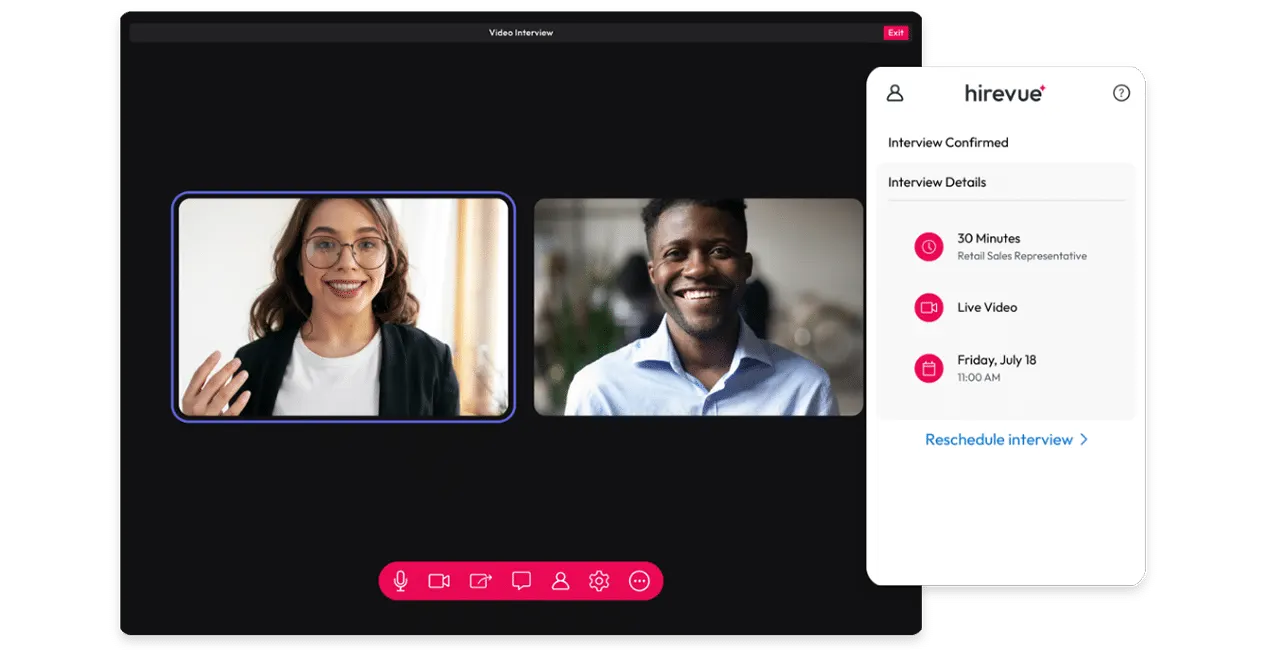
 Ace Your AI Video Interview in 2026: HireVue Tips & Prep Guide
Jul 10, 2026
 Resume
 Beat AI-Powered ATS in 2026: What Your Resume Must Do Now
Jul 10, 2026
 Skills
 Best AI Skills to Put on Your Resume in 2026 (Get Hired Fast)
Jul 10, 2026